

Understanding the primary causes of battery wear
- Poor storage habits.
- Inappropriate charging routines.
- Lack of proper water refilling.
Proven charging habits for extended battery life
Implement these five essential charging practices:
Post-shift Recharge
Recharge the machine after each daily shift to prevent improper charging frequencies from degrading chemical components.
Low SOC limit (20%)
Initiate a recharge before the SOC drops below 20% to avoid deep discharges that encourage harmful sulfation.
Weekly full charge (100%)
Perform a full recharge reaching 100% SOC at least once a week without cutting the cycle short.
Approved charging profile
Always adhere to the manufacturer's recommended charging curve and use approved chargers tailored to the specific battery model and ambient temperatures.
Equalization phase (Every 7 Cycles)
Conduct an equalization phase every 7 full charges (excluding AGM or GEL batteries) by leaving the machine plugged in for an additional three hours to restore original capacity levels.
Additionally, combatting natural sulfation, the formation of lead sulfate crystals on battery plates, requires scheduling a desulfation cycle (using ultra-slow charging or negative pulse modes) every six months.
Safe storage protocols and temperature management
Follow these five steps for successful equipment and battery storage:
Step 1: Power disconnection
Disconnect the main power circuit plug in accordance with local regulations and wearing appropriate personal protective equipment.
Step 2: Terminal inspection
Inspect battery terminals to ensure a complete absence of oxidation.
Step 3: Cable security
Verify that all cable terminals are tightly secured to the battery posts.
Step 4: Pre-shutdown charge
Perform a complete charge prior to shutting down equipment storage.
Step 5: Electrolyte level top-up
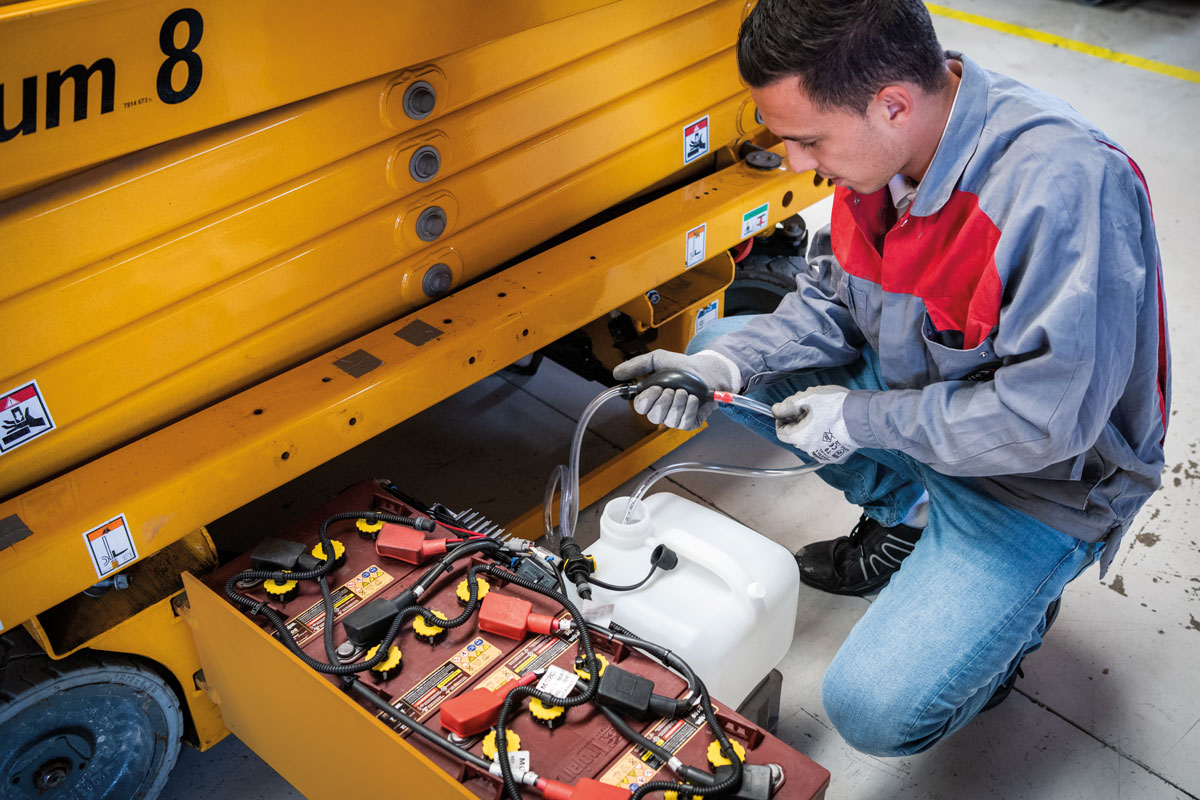
Inspect fluid levels and top up to recommended levels using deionized or distilled water.
Upon taking equipment out of storage, reconnect the main power circuit plug and execute a full recharge before deployment.
Water management for lead-acid batteries
.jpg)
Activ'Energy Management & Sherpal
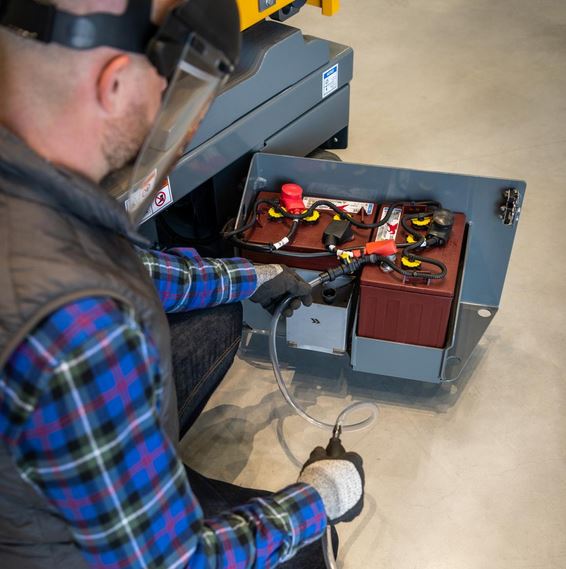
To eliminate complexities associated with battery upkeep, Haulotte engineered Activ'Energy Management (AEM).
Activ'Energy Management (AEM)
This intelligent technology pairs smart chargers with automated water-refilling solutions to slash maintenance requirements and replacement costs. The system governs all charging parameters while incorporating dedicated maintenance cycles like equalization and desulfation.
Sherpal telematics integration
Combined with Sherpal telematics, fleet managers can remotely track, communicate, and diagnose battery fault codes in real-time through the MyHaulotte portal.
Safety focus: Handling hazards and compliance
- Mandatory Personal Protective Equipment (PPE): Always wear chemical-resistant gloves, eye protection, and appropriate workwear when handling battery fluids or performing maintenance.
- Electrical isolation: Always isolate power circuits before disconnecting cables or performing terminal inspections to prevent arcing or short-circuits.
- Regulatory alignment: Ensure all maintenance procedures comply with local labor laws and standard operating safety guidelines.